Recent Posts

Browsing "Older Posts"

Browsing Category " Mac OS X "

General

Core Plot - graph plotting framework
Dropbox API - add Dropbox support to your apps
ShareKit adds sharing capabilities to your app. Allow users to share URLs, images, text and files with services like Facebook, Delicious, Instapaper, Twitter, and more.
OmniGroup has a set of open source frameworks for handling a wide range of tasks, including string scanning, regular expressions, data storage, preferences panels, and networking.
Three20 offers several new UI view controllers such as a photo browser, launcher, and internet-aware tables.
Nimbus offers many of the same features of Three20, with the goal of being better documented and easier to use.
Hue: A Generic Color Picker for the iPhone

Game Development

Sparrow is a lightweight game development library layered over OpenGL.
cocos2d for iPhone is another 2d game framework built atop OpenGL.

Networking and Security

OAuth Consumer - an OAuth library for iOS. Useful when building client programs for APIs that require OAuth for user authentication.
ASIHTTPRequest - a CFNetwork wrapper that simplifies web communications.
AsyncSocket - when HTTP connections aren't enough, this library gives you a TCP and UDP socket library.
JSON Framework - a strict JSON parser and generator for Objective-C. (Examples)

Open Source Code Libraries for iPhone/iOS

By Sinh Pham → Sunday, 18 May 2014

Are you a programmer looking for a new challenge? Does the thought of building your very own iPhone app make your heart race and your pulse quicken? If so, then Beginning iPhone Development is just the book for you.
Assuming only a minimal working knowledge of Objective-C, and written in a friendly, easy-to-follow style, Beginning iPhone Development offers a complete soup-to-nuts course in iPhone and iPod Touch programming.
The book starts with the basics, walking you through the process of downloading and installing Apple's free iPhone software development kit, then stepping you though the creation of your first simple iPhone application. You'll move on from there, mastering all the iPhone interface elements that you've come to know and love, such as buttons, switches, pickers, toolbars, sliders, etc.
You'll master a variety of design patterns, from the simplest single view to complex hierarchical drill-downs. You'll master the art of table-building and learn how to save your data using the iPhone file system. You'll also learn how to save and retrieve your data using SQLite, iPhone's built-in database management system.
You'll learn how to draw using Quartz 2D and OpenGL ES. You'll add multi-touch gesture support (pinches and swipes) to your applications, and work with the Camera, photo library, and Accelerometer. You'll master application preferences, learn how to localize your apps into other languages, and so much more.
Apple's iPhone SDK, this book, and your imagination are all you'll need to start building your very own best-selling iPhone applications.

Beginning iPhone Development Exploring the iPhone SDK

By Sinh Pham → Sunday, 11 May 2014


Book Description
Overcome the vexing issues you're likely to face when creating apps for the iPhone, iPad, or iPod touch. With new and thoroughly revised recipes in this updated cookbook, you'll quickly learn the steps necessary to work with the iOS 7 SDK, including solutions for bringing real-world physics and movement to your apps with UIKit Dynamics APIs.

You'll learn hundreds of techniques for storing and protecting data, sending and receiving notifications, enhancing and animating graphics, managing files and folders, and many other options. Each recipe includes sample code you can use right away.
Book Details
Publisher: O'Reilly Media
By: Vandad Nahavandipoor
ISBN: 978-1-44937-242-2
Year: 2013
Pages: 1056
Language: English
File size: 53.7 MB
File format: PDF


iOS 7 Programming Cookbook

By Sinh Pham →

Programming in Objective-C 2.0 provides the new programmer a complete, step-by-step introduction to Objective-C, the primary language used to develop applications for the iPhone, iPad, and Mac OS X platforms.
The book does not assume previous experience with either C or object-oriented programming languages, and it includes many detailed, practical examples of how to put Objective-C to use in your everyday iPhone/iPad or Mac OS X programming tasks.
A powerful yet simple object-oriented programming language that’s based on the C programming language, Objective-C is widely available not only on OS X and the iPhone/iPad platform but across many operating systems that support the gcc compiler, including Linux, Unix, and Windows systems.
The second edition of this book thoroughly covers the latest version of the language, Objective-C 2.0. And it shows not only how to take advantage of the Foundation framework’s rich built-in library of classes but also how to use the iPhone SDK to develop programs designed for the iPhone/iPad platform.
Table of Contents

1 Introduction 
Part I: The Objective-C 2.0 Language
2 Programming in Objective-C
3 Classes, Objects, and Methods 
4 Data Types and Expressions
5 Program Looping
6 Making Decisions
7 More on Classes
8 Inheritance
9 Polymorphism, Dynamic Typing, and Dynamic Binding
10 More on Variables and Data Types
11 Categories and Protocols
12 The Preprocessor
13 Underlying C Language Features
Part II: The Foundation Framework
14 Introduction to the Foundation Framework 
15 Numbers, Strings, and Collections 
16 Working with Files 
17 Memory Management 
18 Copying Objects 
19 Archiving 
Part III: Cocoa and the iPhone SDK
20 Introduction to Cocoa
21 Writing iPhone Applications 
Part IV: Appendixes
A Glossary 
B Objective-C 2.0 Language Summary 
C Address Book Source Code
D Resources

iPhone in Action Introduction to Web and SDK Development

By Sinh Pham →
Packing the power of desktop applications into a small mobile device, the iPhone SDK offers developers the ability to create dynamic, visually-appealing, and highly-capable mobile applications. However, harnessing that power means learning new tools, new APIs, and even a whole new programming language.
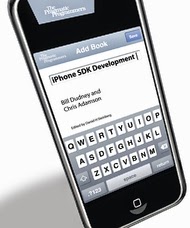
iPhone SDK Development is a Pragmatic guide that takes you beyond the first steps of developing applications for the iPhone. We’ll move you quickly through the introductory material to get you started developing applications for iPhone and iPod touch. Once you’ve been introduced to the tools and the basics, you’ll learn the APIs and techniques needed to succeed on the platform:
  • Use the XCode IDE to manage your source code, images, sounds, database files, and other application resources, building your app and deploying it onto your own device for testing.
  • Develop your user interface the visual, code-free way, and then wire it to your code with Interface Builder.
  • Master the iPhone’s unique user interface components, including tables, tab bars, navigation bars, and the multi-touch interface.
  • Connect your iPhone to the outside world with networking and to other phones with Bonjour and Game Kit.
  • Exploit the power of data modeling with Core Data, or interact directly with the SQLite database API.
  • Distinguish your application from others by taking advantage of the first-class support for images, animation, audio, and video.
  • Make use of the iPhone’s unique mobile APIs, like geolocation, Map Kit, the compass, and the motion-sensing accelerometer.
  • Use XCode’s powerful performance and debugging tools to eliminate memory leaks, zombies, and other hazards.
With more than 50 sample programs (updated for iPhone SDK 3.0), explorations of the big picture, and an eye to the little details that you’ll need, iPhone SDK Development goes beyond basic developer docs to help you succeed on today’s most important mobile platform.


iPhone SDK Development

By Sinh Pham →


The aim of iPhone iOS 6 Development Essentials is to teach you the skills necessary to build your own applications for the iPhone. Beginning with the basics, this book provides an overview of the architecture of iOS 6. Introductions to Xcode and programming in Objective-C are provided followed by an in-depth look at the design of iPhone applications and user interfaces. More advanced topics such as user interface layout, file handling, database management, graphics drawing and animation are also covered, as are touch screen handling, multitasking, in-app purchasing, iCloud storage, camera access and video playback. New iOS 6 specific features are also covered in detail including Facebook integration, Auto Layout, Apple Maps, Collections, Reminders and user interface state preservation. iPhone iOS 6 Development Essentials takes a modular approach to the subject of iOS 6 application development with each chapter covering a self contained topic area with detailed explanations, examples and tutorials. This makes the book both an easy to follow learning aid and an excellent reference resource.

ISBN: 9781479211418
ISBN-10: 1479211419
Audience: General 
Format: Paperback 
Language: English 
Number Of Pages: 652
Published: 23rd October 2012
Publisher: CreateSpace 
Dimensions (cm): 23.5 x 19.0  x 3.3 
Weight (kg): 1.102 
'

iPhone IOS 6 Development Essentials

By Sinh Pham →


Learn to write apps for some of today's hottest technologies, including the iPhone and iPad (using iOS), as well as the Mac (using OS X). It starts with Objective-C, the base language on which the native iOS software development kit (SDK) and the OS X are based. Learn Objective-C on the Mac: For OS X and iOS, Second Edition updates a best selling book and is an extensive, newly updated guide to Objective-C.

Objective-C is a powerful, object-oriented extension of C, making this update the perfect follow-up to Dave Mark’s bestsellingLearn C on the Mac. Whether you’re an experienced C programmer or you’re coming from a different language such as C++ or Java, leading Mac experts Scott Knaster and Waqar Malik show how to harness the power of Objective-C in your apps!
  • A complete course on the basics of Objective-C using Apple’s newest Xcode tools
  • An introduction to object-oriented programming
  • Comprehensive coverage of new topics like blocks, GCD, ARC, class extensions, as well as inheritance, composition, object initialization, categories, protocols, memory management, and organizing source files
  • An introduction to building user interfaces using what is called the UIKit
  • A primer for non-C programmers to get off the ground even faster

What you’ll learn

  • Learn Objective-C programming, the gateway to programming your iPhone, iPad or Mac
  • Write apps for the iOS and/or OS X interfaces, the cleanest user-interfaces around
  • Understand variables and how to design your own data structures
  • Work with the new Objective-C features now available in this update like blocks, automated reference counting (ARC) and class extensions
  • Work with new tools available like Clang static analyzer and Grand Central Dispatch (GCD)
  • Undertand UIKit and how to build simple user interfaces easily and effectively
  • Explore using the latest Xcode

Who this book is for

For anyone wanting to learn to program native apps in iOS and/or OS X, including developers new to the iOS-based iPhone and iPad as well as OS X-based Mac computers. This book is for developers new to Objective-C, but who have some programming experience.

Learn Objective-C on the Mac For OS X and iOS

By Sinh Pham →
At seems as if everyone is writing applications for Apple’s iPhone and iPad, but how do they all do it? It’s best to learn Objective-C, the native language of both the iOSand Mac OS X, but where to begin? Right here, even if you’ve never programmed before!

Objective-C for Absolute Beginners will teach you how to write software for your Mac, iPhone,or iPad using Objective-C, an elegant and powerful language with a rich set of developer tools. Using a hands-on approach, you’ll learn to think in programming terms, how to use Objective-C to build program logic, and how towrite your own applications and apps.

With over 50 collective years in software development and based on an approach pioneered at Carnegie Mellon University, the authors have developed a remarkably effective approach to learning Objective-C. Since the introduction of Apple’s iPhone, theauthors have taught hundreds of absolute beginners how to develop Mac, iPhone,and iPad apps, including many that became popular apps in the iTunes App Store.
What you’ll learn

The fundamentals of computer programming: how to understand variables,design data structures, and work with file systems
The logic of object-oriented programming: how to use Classes, Objects, and Methods
The flexibility of Apple̢۪s developer tools: how to install Xcode and write programs in Objective-C
The power of Cocoa and Cocoa touch: how to make Mac OS Xapplications or iOS apps that do cool stuff


Objective-C for Absolute Beginners iPhone, iPad and Mac Programming Made Easy

By Sinh Pham →

Programming in Objective-C 2.0 provides the new programmer a complete, step-by-step introduction to Objective-C, the primary language used to develop applications for the iPhone, iPad, and Mac OS X platforms.

The book does not assume previous experience with either C or object-oriented programming languages, and it includes many detailed, practical examples of how to put Objective-C to use in your everyday iPhone/iPad or Mac OS X programming tasks.

A powerful yet simple object-oriented programming language that’s based on the C programming language, Objective-C is widely available not only on OS X and the iPhone/iPad platform but across many operating systems that support the gcc compiler, including Linux, Unix, and Windows systems.

The second edition of this book thoroughly covers the latest version of the language, Objective-C 2.0. And it shows not only how to take advantage of the Foundation framework’s rich built-in library of classes but also how to use the iPhone SDK to develop programs designed for the iPhone/iPad platform.

Table of Contents

   1    Introduction 
Part I: The Objective-C 2.0 Language
    2    Programming in Objective-C 
    3    Classes, Objects, and Methods 
    4    Data Types and Expressions
    5    Program Looping
    6    Making Decisions
    7    More on Classes
    8    Inheritance
    9    Polymorphism, Dynamic Typing, and Dynamic Binding
  10    More on Variables and Data Types
  11    Categories and Protocols
  12    The Preprocessor
  13    Underlying C Language Features
Part II: The Foundation Framework
  14    Introduction to the Foundation Framework 
  15    Numbers, Strings, and Collections 
  16    Working with Files 
  17    Memory Management 
  18    Copying Objects 
  19    Archiving 
Part III: Cocoa and the iPhone SDK
  20    Introduction to Cocoa 
  21    Writing iPhone Applications 
Part IV: Appendixes
  A    Glossary 
  B    Objective-C 2.0 Language Summary 
  C    Address Book Source Code
  D    Resources

Programming in Objective-C 2.0 (2nd Edition)

By Sinh Pham →